
'/%3e%3cdefs%3e%3clinearGradient%20id='prefix__paint0_linear_4737_37157'%20x1='3.018'%20y1='23.6'%20x2='44.925'%20y2='24.977'%20gradientUnits='userSpaceOnUse'%3e%3cstop%20stop-color='%231CB7FF'/%3e%3cstop%20offset='.502'%20stop-color='%232FF58B'/%3e%3c/linearGradient%3e%3c/defs%3e%3c/svg%3e)

COULD Kieran McKenna Be Manchester United’s Bold Gamble?
Jan 14 2026 16:16 · By onefootball.com · 22 Reads


Picture the scene – it’s October 2022.
A friend sends me a photo from the Parc des Princes – he’s watching Lionel Messi, Kylian Mbappé and Neymar under the Champions League lights. Football at its most polished.
I open the image while standing in the Ipswich Town away end at Vale Park, where K ieran McKenna’s Ipswich are looking to take another step forward in their promotion charge in League One.
One of us is watching the greatest footballer of all time, the other is watching Cameron Humphreys score his first senior goal.
That contrast has stayed with me. Not because of what football looked like that night, but because of what it was.
At Ipswich, Kieran McKenna is proving that progress is built, not bought – a lesson Manchester United may soon need to relearn.
Manchester United turning to the lifelong Red Devils supporter would be a clear risk – but might it work?
Kieran McKenna plays attacking, free-flowing football. When at their best, Ipswich are a direct team, who go from back-to-front in just one or two passes – all down to their players knowing their simple, but specific roles.
Without the ball, McKenna would set United up in a 4-2-3-1 formation, that presses when it needs to, but also sits in a block at other times.
Ipswich have averaged winning possession 4.0 times p/90 in the Championship this season – only behind two teams.
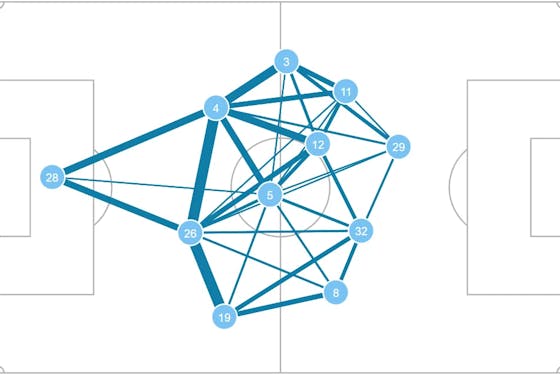
Ipswich’s average positions vs Oxford Utd 1/1/26 [Credit Opta Analyst]
From the average position graph, you can see how many triangles and passing patterns are formed.
Against Oxford United, the three of Cedric Kipre (4), Leif Davis (3) and Jaden Philogene (11) exchanged possession a whopping 50 times.
These natural passing patterns are something United really struggled to consistently perform under Ruben Amorim. McKenna would fix that.
Ipswich are an extremely effective side. Whether they’re facing up against a high press or a low block – they usually find a way, here’s how:
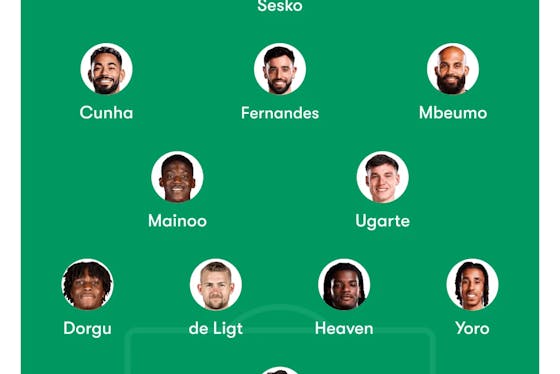
McKenna enjoys playing a left back that plays high and wide at Ipswich – meaning a three back is formed in possession.
Leif Davis, a natural in this role, is a fast, direct full back – similar to what United already have in Patrick Dorgu, who would become the main outlet on the left-hand side.
Given Dorgu has already shown capabilities as a forward at times for Manchester United , this Davis role of dominating the left flank is practically made for him.
This then allows Cunha to come inside – his best role, overall suiting the side well.
It’s a slightly safer version of what Vincent Kompany is doing at Bayern Munich in terms of shape – but much more direct.
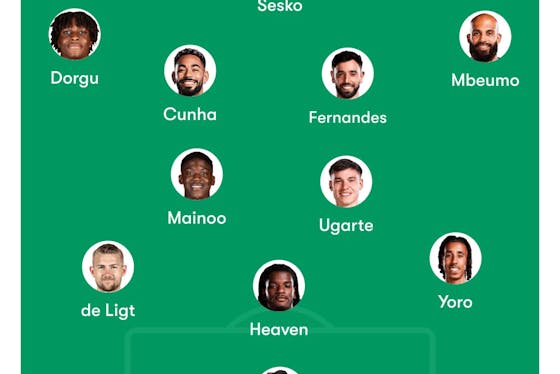
Without the ball, United would form a more conventional back four, a formation that United fans have been crying out for. The Red Devils would be aggressive, tough to play through, and ready to pounce on loose balls in the hopes of springing a counter attack.
Despite being more of a centre half, Lenny Yoro could be transformed into a McKenna full back – that forms the right side of a three when the team has the ball, and a four without it.
McKenna has already played the likes of Axel Tuanzebe, Harry Clarke and Ben Johnson in this role for Ipswich- Yoro would be a revolution. Overall, Manchester United have a starting eleven practically perfect for McKenna to inherit.
READ MORE: Setting The Record Straight On Manchester United’s DNA
As well as a well-oiled plan A, United need a backup plan – McKenna has that.
Against the ‘bigger sides’ in the Premier League at Ipswich, Kieran McKenna set up with a 5-4-1 out of possession – but fear not, it is much simpler than Amorim’s.
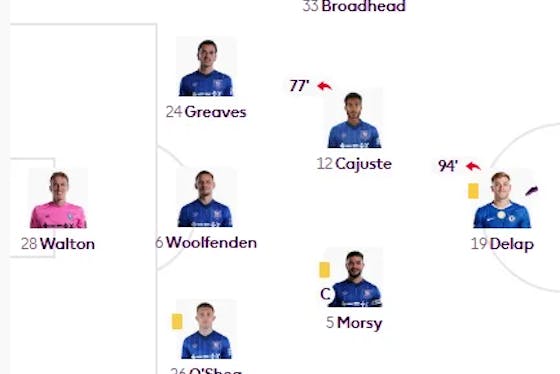
Ipswich’s OOP formation in their 2-0 win vs Chelsea 30/12/24
The back five spread the width of the pitch in possession and create attacking numbers. In their 2-0 win last season, Ipswich outnumbered Chelsea in turnover areas and won the game comfortably, with just 24% possession.
While United are looking to reassert themselves as a dominant side in England, and shouldn’t be setting up in a ‘negative’ way, having a plan B if things aren’t working is always astute.
As well as an astute tactician, United arguably are in greater-need of a good man-manager.
Kieran McKenna is loved by the players and fans at Ipswich Town , and former striker, who only played 27 times for Ipswich, Ali Al-Hamadi, labelled the Northern Irishman as ‘ one of the best around’.
https://twitter.com/alikalhamadi/status/2006430620952506421?ref_src=twsrc%5Etfw
McKenna is a manager who came into Ipswich Town as the leader of their rebuild. The man to lead the uninspired side away from their 15 years of dross.
A situation that sounds familiar, United fans?
McKenna has been an overwhelming success, and nearly kept a Championship standard side in the Premier League last season, despite it being a complete closed shop for the promoted sides.
Relegation from the Premier League wasn’t the end; it was just the first chapter.
Given the squad and financial power of Manchester United , a club he loves so much, Kieran McKenna would undoubtedly have the tools to succeed.
The key to Ipswich’s rebuild under Kieran McKenna has been smart recruitment.
Following a change of ownership to Gamechanger 20 Ltd in the summer of 2021, months before Kieran McKenna arrived at Ipswich, the Blues made a total of 19 signings.
With a significant turnover of players, the project was really beginning – and the Tractor Boys had a clear transfer strategy.
For each position, two players are recruited. If the side needed a technical attacking midfielder, they’d try to get two similar profiles. Et cetera.
Here are some of the key profiles Kieran McKenna has brought in:
Hold-up striker: Liam Delap and George Hirst have been the two key strikers for Ipswich Town in Kieran McKenna’s most successful points at Portman Road. Both centre forwards are capable of making bursting runs through the lines, as well as holding up the ball – critical for Ipswich’s direct counter-attacking moves.
Pacey right winger: Wes Burns and Chiedozie Ogbene were Ipswich Town’s two right-wing players in their 2024/25 Premier League campaign. Both fast, direct wingers, they offer similar attributes to Amad Diallo.
https://twitter.com/IpswichTown/status/1742593677015310623?ref_src=twsrc%5Etfw
Technical attacking midfielder: Ipswich have had many of these in McKenna’s time at the club. Conor Chaplin, Omari Hutchinson and Marcelino Nunez are the standouts – but not quite the same type of players as Bruno Fernandes!
Attacking left back: Leif Davis has been the only mainstay in Kieran McKenna’s time at Ipswich – and the perfect player for his system too. A fast outlet, capable of pinpoint crosses, Davis is Premier League quality.
Inverted right back: From Harry Clarke to Daniel Furlong, the right defender role has been crucial in Ipswich’s rise, and emphasises the patient, measured yet exciting approach adopted by McKenna. Lenny Yoro could very well be coached into this role.
McKenna, a Red Devils fan himself, turned down Brighton and Chelsea in 2024. United had interest, but chose to stick with Erik ten Hag, which they learnt to regret. The Red Devils job is seen by many as the one that could finally prise McKenna away.
After a knee-jerk thirteen years since Sir Alex Ferguson, Manchester United are in dire need of stability and trust in a manager whom ALL senior figures at the club can put their trust in.
The key issue is media pressure. If given the job, could Kieran McKenna handle it? That’s the risk that United have to take.
But there are no doubts about his man-management, tactical intelligence and ability to blood youth players, in-fitting with the ‘United DNA’.
I think it would be a fantastic appointment. Over to you, INEOS.
To this day, I don’t really understand why I was there, stood watching Port Vale against Ipswich Town . But looking back, it feels like I was there for the first chapter of a story still being written.
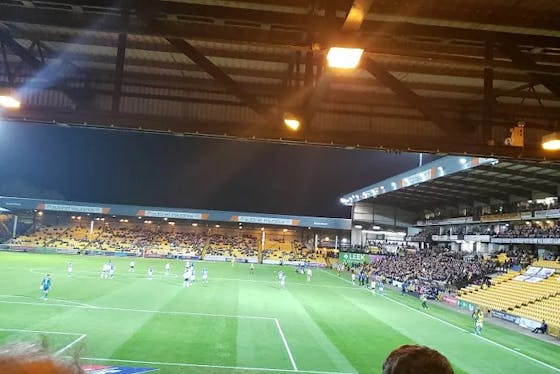
Writer’s View: Humble Beginnings
What makes Kieran McKenna so different? He didn’t announce himself with noise or spectacle. He built, improved and elevated – one player, one system, one season at a time.
If Manchester United are serious about finding a long-term saviour rather than a short-term fix, perhaps the answer isn’t found in Europe’s grandest stadiums, but in the quiet evidence of work done properly.